What do a public library and a regional newspaper have in common? A Q&A with Eli Neiburger, Director of Ann Arbor District Library.
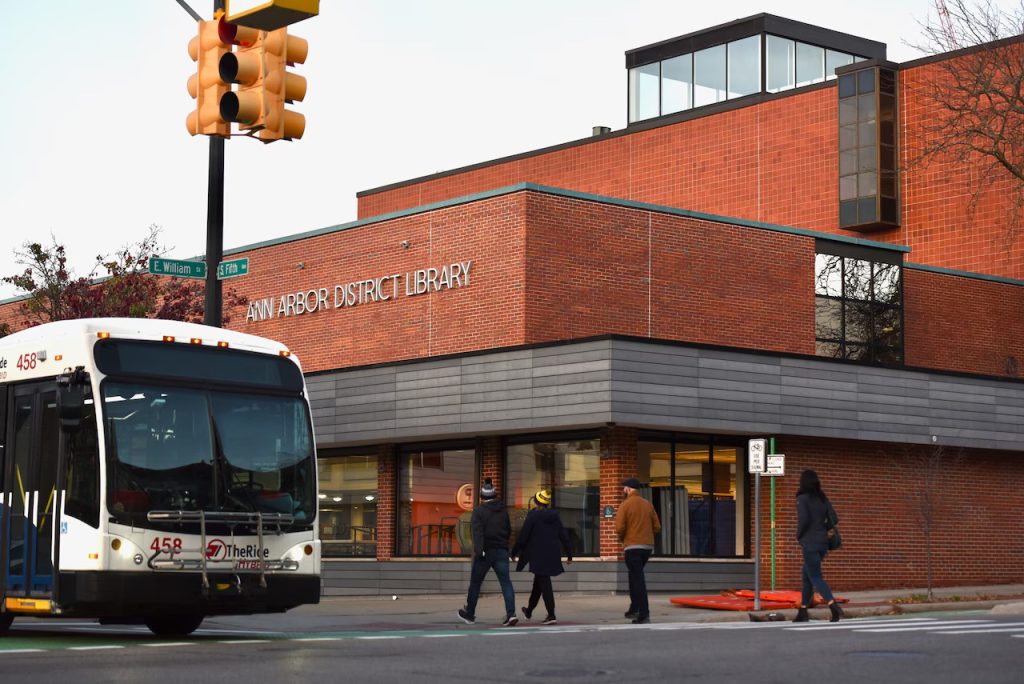
All too often, the news focuses on organizations shutting down—museums, cultural groups, and newspapers closing their doors. But what if, instead, the story was about these organizations starting a new chapter? Their second story is that a new organization joins an existing one to keep serving the community with the same services and offerings.
That’s the story happening, or in progress now, in Ann Arbor, where the public library is exploring new territory. It’s no longer just a content provider but also a content creator, in the process of becoming the new home for a beloved local newspaper. It’s an unusual idea, but also a revealing one. What happens when a trusted public institution steps in to help sustain another community resource?
While this story starts with a library and a newspaper, the questions it raises extend well beyond the library world. Museums and other cultural organizations might one day find themselves in similar situations, supporting, stewarding, or helping to stabilize institutions that serve their communities.
To gain a clearer picture of how this effort is unfolding and what it could mean for the future of civic institutions, I spoke with Ann Arbor District Library Director Eli Neiburger.
Adam Rozan: While congratulations are premature, as the conversation with the Observer is still underway, it still seems like the right thing to say, as you and the library are charting new ground. Can you share more about what’s happening? I’d love to understand how this will all work in detail.

Eli Neiburger: The conversation is ongoing, and we’re still discussing with the current owners of the Observer, who’ve owned the paper since 1984. For background, the Observer is a 50-year-old monthly free print publication that circulates through the mail in the community and is much loved. The current owners are also the editor and publisher, so they aren’t just owners, but also produce the paper. They’re preparing to retire and are looking for a new home for it.
So, the best way to understand this is that the library is midwifing the paper transition into a nonprofit newspaper,as an affiliated nonprofit of the library, similar to a Friends of the Library group. We’re very much still working through the details.
AR: A non-profit that’s stewarded by the library? Am I understanding this correctly, and which services will you support the paper with? Administration. Human Resources?
EN: It’s really helping the legal aspect of the transition and establishing the new nonprofit organization—the Observer, if this transaction proceeds. This would make the Observer a sister nonprofit to the library, just like the Friends of the Library are. They would still have their own employment and bank accounts; it’s not becoming part of library operations. Instead, it would become a nonprofit under the library’s institutional umbrella.
AR: What are some of the additional details that are being discussed? For example, will you be providing office space, storage, and board seats?
EN: Almost every library has an affiliated nonprofit Friends of the Library, right? And just like we provide our Friends of the Library with space to operate rent-free, which is part of our agreement because they’re a sister nonprofit and the library is committed to their ongoing support, as their work supports our efforts, this would be a similar setup.
The Observer, if they choose to proceed, would move their physical footprint into our logistics facility, where our archives are stored, so that they would have office space there. They would have warehouse and content production space there as well, and just like our Friends, it would all be rent-free.
AR: I recognize that the Observer is a beloved community newspaper and a true community resource, and, for the library, it’s a significant undertaking. So, let me ask you, the resource-to-reward question: why do this?
EN: Important question. The impetus was knowing that the publishers were looking to sell, and the Library was in a position to help the paper maintain its community interests.
It’s important to us at the Ann Arbor District Library that the paper would be accountable to the public. It’s our mission to ensure that the public has access to high-quality print and informational resources. We have an opportunity here to ensure that the content remains available to the public and that the future of the Observer remains a resource for the community.
We think this could be a great model, and similar efforts are happening all across the US—you know, there are papers of all sizes that are converting to the nonprofit model.
AR: Seats on the board?
EN: Our Library board is elected. This doesn’t change that structure. Their new board, if we decide to move forward, could include a certain number of seats for library staff, so that their experience and resources can best help the paper..
AR: In addition to staff time, what other resources are being invested in this effort?
EN: In addition to the time that staff like myself are involved in, we’d like to purchase a license to their content. The Observer could then use those funds to help complete its transition to nonprofit status if it chooses to do so.
AR: Fascinating. Do you know of other libraries that double as a news agency?
EN: As far as we know, the library component here is new, but it’s a good fit for our wheelhouse. We started doing journalism here when the Ann Arbor News laid off its arts reporters 15 years ago, which led to our arts blog Pulp. Here in Ann Arbor, it’s the only outlet professionally covering the arts in our community.
I think libraries will increasingly play a role in producing information rather than just conveying it, because in many communities, we are the most trusted government entity.
AR: If the Observer becomes part of the library, what differences, if any, will there be for the paper and its readers?
EN: The goal of this transaction is that the Observer keeps operating the way that it’s been operating. It’s profitable, and they continue to operate as an ad-supported monthly publication. We would start distributing it at the branches—have stacks of it—which we haven’t really done before, but we could have at any point.
The goal is to place the Observer under an ownership model that makes it accountable to the public and ensures its continued existence.
AR: Can we talk more about the decision-making process behind the transaction?
EN: Good question. Partially, what makes this feasible is the scale; the Observer employs about 20 people, whereas we employ about 260 people.
We’re fortunate to have healthy funding. Part of that is because we’re a district library; we’re not part of the county or the city. We have our own elected board, our own dedicated tax. That’s something that only exists in a few states—Michigan is one of them. But district libraries enable this sort of, you know, idea to come to fruition because the library is truly independent.
And we’re not talking about a rescue operation. The Observer is healthy and profitable. So it’s not going to take operational money from the library. We also have other resources, like our robust IT infrastructure that couldto benefit the paper; including a team of software developers.
AR: That’s helpful to understand. And in terms of mission and audience?
EN: Part of what makes so much sense for us as a library, is that their service area, where they distribute the paper for free, is virtually identical to ours. We share the same borders. That’s a great starting place.
The other factor, and this is important, is that they’re a monthly. Meaning the paper isn’t in the breaking news business. They’re more longitudinal. What are the new restaurants? What’s going on in the community? What are the big ongoing discussions before the city council, not what happened yesterday?
It’s harder to envision a library playing any role in a breaking news business, because that’s very outside our 500-year horizon, right? Whereas a monthly—you look back at the first issue of the Observer from 1974, and it’s like all the issues that they’re talking about then are still issues in the community.
AR: Last question, and thank you again for taking the time to chat. What’s next?
EN: The next step is with the Observer. It’s to help them determine what it would mean to be a nonprofit news organization rather than a for-profit one, and what that would mean for their operations. Provided they decide to proceed, we would create a transaction agreement brought before our elected board for approval. There would be a date when the agreement is signed, and at some point in the future, the transaction would close. And the current Observer organization would cease to exist. The new Observer organization, a nonprofit established as a supporting organization of the library, would begin publishing the Observer. The board would be established and the bylaws would be set up. Right now, it’s still mostly an idea, but from what we’ve been hearing from our community, it sounds like a good one!.